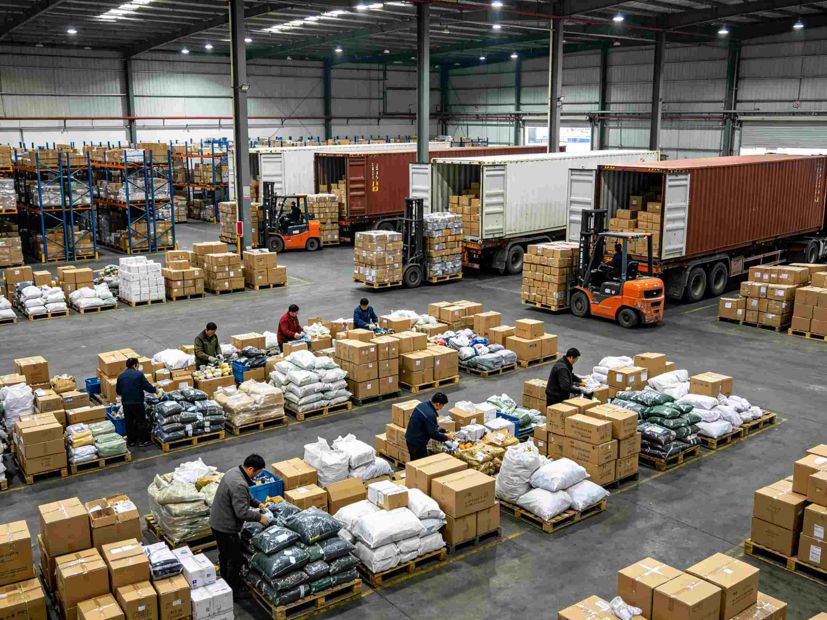

New Policy on Export Tax Rebates for Daily Necessities Takes Effect on April 1st: Structural Adjustments Guide Foreign Trade Enterprises to Upgrade
Starting from April 1st, the 2026 export tax rebate adjustment policy for daily necessities (Announcement No. 2) has officially taken effect. Focusing on structural adjustments, it adopts “selective reductions and protections” for tax rebates of ceramics, household items and batteries, with the customs declaration export date as the sole criterion, affecting enterprises’ costs and profits and promoting the industry’s shift to high-quality development.
Traditional daily necessities (e.g., ceramics, ordinary glass) have their tax rebate rate cut from 3%-9% to 0% without a transition period. Civilian batteries will see a rate drop from 9% to 6% (Apr-Dec 2026) and full abolition in 2027.
Meanwhile, high-value-added products (e.g., high-end home textiles, eco-friendly household goods) are supported, with some tax rebates raised from 11% to 13%. A taxation official said the adjustment is not “one-size-fits-all” but aims to optimize the industry and promote green, branded development.
A late-March customs declaration rush occurred as enterprises rushed to lock in tax rebates. A Guangzhou foreign trade enterprise noted zero tax rebate for ceramic tableware has increased costs, leading to price negotiations and order adjustments.
Compliant declaration is key: accurate HS code declaration and complete document filing are required, with strict inspection on irregularities. Export tax rebates are fully electronized for higher efficiency.
Taxation and customs departments have provided policy guidance. Insiders said short-term pressure will accelerate industry reshuffling, urging enterprises to increase R&D and expand high-value-added products and cross-border e-commerce.
A Ministry of Commerce spokesperson stated the adjustment optimizes foreign trade structure. Relevant departments will optimize tax rebate services to help enterprises transition and boost high-quality daily necessities exports.
China Strengthens Export Controls on Dual-Use Items to Regulate Foreign Trade Order
Since the beginning of 2026, China has achieved remarkable results in upgrading export control measures for dual-use items. This upgrade not only implements the requirements of relevant regulations but also aligns with the needs of the foreign trade industry. Through full-chain supervision, while safeguarding national security and fulfilling international obligations, it regulates foreign trade operations, and supports the high-quality development of foreign trade and the stability of global industrial and supply chains.
Dual-use items refer to goods, technologies, and services that have both civil and military uses and may be used in fields related to weapons of mass destruction, which are a key focus of China’s foreign trade supervision. The core principle of China’s control is to balance security and development, ensure the smooth flow of legitimate foreign trade, and strictly prevent relevant items from flowing into sensitive areas.
This control focuses on key strategic items in the foreign trade field such as tungsten and rare earths, refines the control list, and strengthens approval and port supervision. In February 2025, 25 tungsten-related items were included in the control list, requiring special permits for export; in January 2026, the measures were tightened, prohibiting the export of tungsten products to relevant Japanese military enterprises and implementing “penetrating supervision”.
The General Administration of Customs stated that China has established a full-chain supervision system, abolished the registration of export operators, implemented paperless license management, optimized the approval and inspection processes, and guided enterprises to avoid risks through compliance training.
The upgrade of controls has affected the global foreign trade pattern and promoted the optimization of China’s foreign trade structure, leading to a rise in global tungsten prices and forcing enterprises to strengthen compliance construction and transform to high-value-added fields. The Ministry of Commerce stated that the policy is in line with domestic laws and international practices, and it will dynamically adjust the control list and strengthen international cooperation in the future. Insiders believe that strengthening controls not only safeguards national security but also regulates foreign trade order, and subsequent efforts will deepen inter-departmental coordination to support the steady and long-term development of foreign trade.
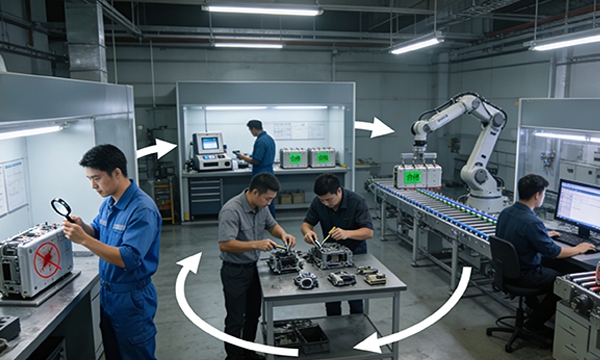
YIHUANHUI enhances global sourcing with strict quality control systems, ensuring zero-defect deliveries through full-chain QC management and real-time digital tracking.
In today’s bustling field of global business, locating the best China sourcing agent goes beyond a simple edge; it stands as a core need for staying afloat and advancing. Many small and medium-sized enterprises across Europe, Asia, and Southeast Asia encounter a rocky road when moving from spotting a market gap to placing solid products on display. That road often involves shipping obstacles, factory setbacks, and budget hazards. Here, YIHUANHUI enters the picture as your dependable ally in worldwide cross-border trade setups. Established in 2025 and positioned squarely in Yiwu’s core, YIHUANHUI taps into the globe’s top small goods market to deliver smooth, complete coverage from early buys to end shipments. The starting team carries more than 10 years of hands-on background in cross-border operations, which helps shift supply chain hurdles into clear business edges. Opting for one-stop China sourcing means more than engaging an agent; it means fitting your company with a full framework built for quick work, open processes, and steady gains.
Why Partner with a One-Stop Sourcing Agent?
Streamlining Global Procurement and Supply Chains
As the best China sourcing agent, we strip away the tough spots in buying by handling a full order cycle. Our services span supply chain steps, starting with basic product sourcing and going up to direct factory orders in China. We oversee supplier vetting, large-volume buys, and thorough quality reviews, so your business sidesteps the typical downsides of disjointed handling. With our “spot supply + flexible production” paired method, we can send out in-demand product lines in 24 hours or less, keeping your supply chain nimble and responsive.
Reducing Operational Costs for Maximum Profitability
Strong workflow drives solid returns. We center on design arrangements to aid clients in trimming expenses. On top of that, by pulling together shipments from various suppliers into our storage area, you cut down sharply on global freight and inner-country transport fees.
Mitigating Risks in Cross-Border Trade Services in China
Handling worldwide trade carries natural dangers, ranging from quality clashes to shifts in international relations. We address these through a routine risk handling framework and a tracking platform for orders that supports live supplier evaluations and instant shipping follows. Our group knows the ins and outs of local laws and customer tastes in Europe, America, and Southeast Asia, which keeps your items fully in line and prepared for sales.
The YIHUANHUI Advantage in Yiwu
Leveraging the World’s Largest Commodity Hub
Our base in Yiwu sits near the Yiwu International Trade City, granting us unmatched reach to thousands of vendors in countless product areas. This spot-based benefit enables us to supply Yiwu with one-stop sourcing by linking the area’s broad trade groups and online commerce shifts.
Tailored Sourcing Support for Growth-Stage SMEs
Big trade outfits often limit themselves to massive volumes, but we zero in on the distinct struggles of SMEs. We deliver simple, fitted buying aid with easy access levels, covering test runs in small quantities and joint buys without a set minimum order quantity (MOQ). Plus, our assigned personal reps give custom tips on choosing goods for markets and sticking to standards.
Comprehensive End-to-End Sourcing China Solutions
Integrated Warehousing and Inventory Management Services
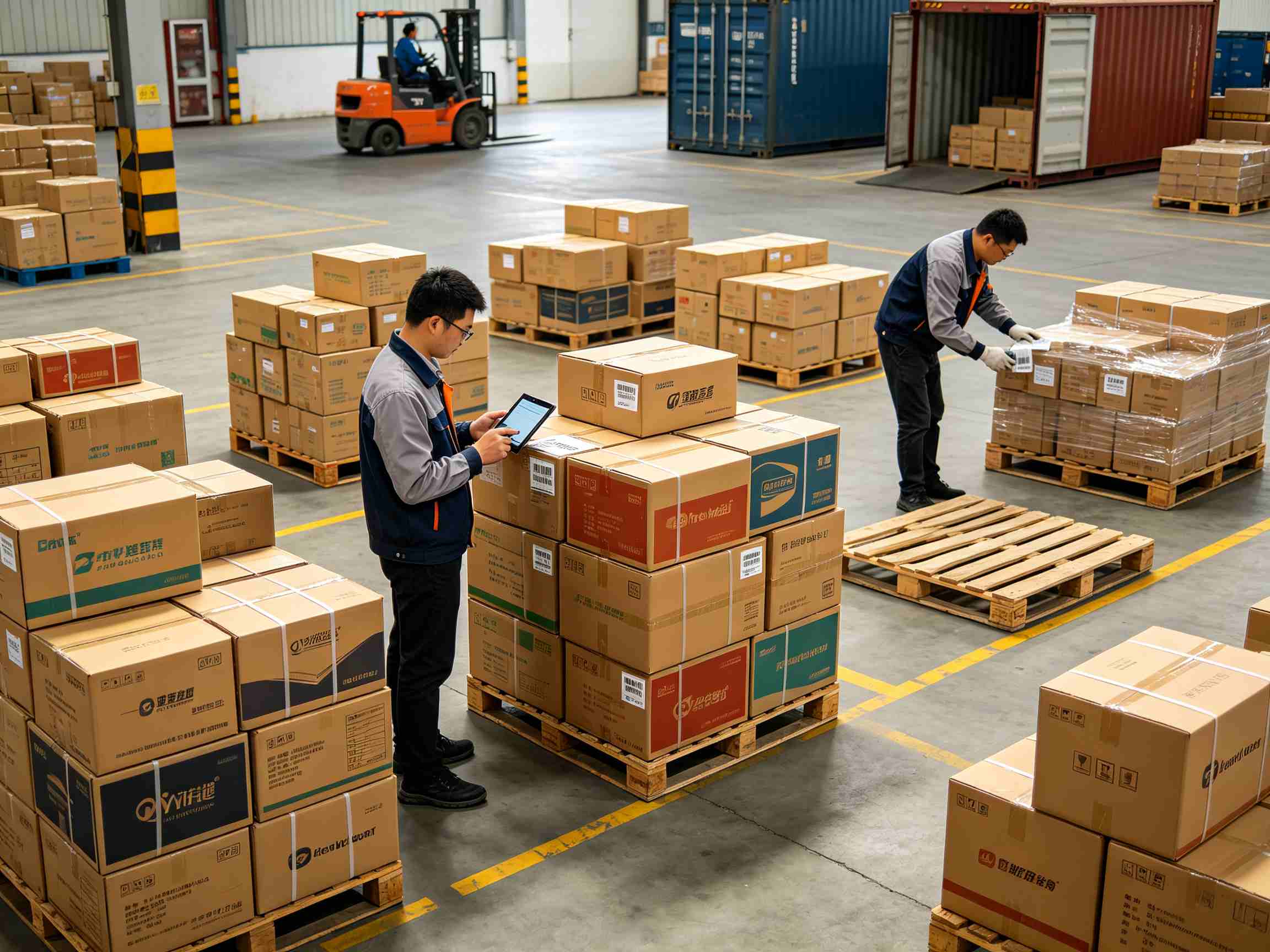
Our storage offerings aim to fix issues with dispersed stock. Suppose you place just a minor share of items via us; still, you may draw on our facility to bundle pieces from other sources into unified oversight. We take charge of organizing, boxing, and tagging—including trade-specific labels and border codes—to ready your cargo for export.
Multimodal Logistics and Customs Clearance Expertise
We deliver the best china sourcing agent standard through four primary haulage routes: rail, ground, air, and water. We shape answers to match your particular wants, be it Full Container Load (FCL) for hefty hauls or Less than Container Load (LCL) for lighter sets. Our command of border filings and reviews guarantees that files like trade bills and load sheets sit neatly arranged for proper passage.
Transparent Financial Plans and Unsecured Credit Support
To lighten funding strains, we supply adaptable funding arrangements. One option is a basic 20% initial payment, followed by the 80% remainder once the load document appears. Trusted ongoing buyers get our unsecured credit support on schedules from 30 to 180 days. In this way, you handle the rest after taking in and shifting the items, which markedly aids your money movement. We further allow RMB price settings to dodge rate swings.
Driving Business Value with Value-Added Services
Full-Chain Quality Control for Zero-Defect Delivery
We apply a full-circle quality oversight setup: spot checks → urgent fixes → swift stand-ins. Should any work or visual issues surface in plant or dock reviews, our focused QC unit starts prompt field mends or trades.
Layout Optimization and Cost-Efficiency Strategies
Our drive for added worth extends past mere product location. We seek practical paths to adjust your setups for expense cuts.
Digital Empowerment for Seamless Order Visualization
We draw on AI-driven picking aids and a broad-language aid network to heighten workflow. Through our order view system, you monitor current states of your cargo—from filings and hauls to border approvals and close drops—which affords complete calm.
Real-World Success in Cross-Border Trade
Solving Inventory Shortages for Southeast Asian Clients
A Southeast Asian store network dealt with an abrupt stock shortage in kids’ block sets. We set in motion a crisis handling protocol. Using a tailored “cross-border ground haul + area-specific path” arrangement, we shipped the load in 5 days, sparing the buyer a stockout emergency.
Accelerating Delivery Cycles for European Distributors
With a European handler of teaching playthings, we reworked the supply path to trim a 45-day haul to 40 days. We fixed base supplies and rolled out a hurried setup, guaranteeing arrival ahead of the holiday sales wave, which sparked a 16% rise in their quarterly earnings.
Optimizing Logistics for North American E-commerce Platforms
A North American web seller sought equilibrium in price and pace for Children’s outdoor toys. We crafted a varied “water haul + abroad storage + end-stretch quick ship” plan. It lowered their haul fees by 24% against full-sky options, yet held to timelines far brisker than classic water paths.
Conclusion
Picking the best China sourcing agent forms a pivotal move for firms set on expansion. At YIHUANHUI, we merge Yiwu’s place-based might with 10 years of dealings skills to furnish one-stop China sourcing that performs reliably. Spanning our top-grade Beerus series and tough Bags to our fresh Outdoor toys, we cover each supply link detail, letting you center on your core task—expanding your mark. Through pliable money schemes, sharp haulage, and a vow to “professional services creating incremental value,” we position ourselves as your firm’s guide amid global trade intricacies. Be it a modest launch or an advancing seller, our end-to-end sourcing of China offerings crafts paths to broaden your world sales in budget-friendly, guarded manners.
Ready to streamline your supply chain and boost your profits? Contact YIHUANHUI today and let us build your global success story together!
FAQ
Q: How does YIHUANHUI ensure the quality of sourced products?
A: We implement a full-chain quality control system that includes factory audits, on-site inspections, and an emergency repair/replacement mechanism to ensure 100% compliance with your standards. We also cooperate with third-party testing for certifications like CE and FDA.
Q: Can YIHUANHUI handle custom product requests for small businesses?
A: Yes! We specialize in supporting SMEs with lightweight, customized procurement. We offer OEM/ODM services, flexible small-batch customization, and even group procurement with no MOQ to help smaller brands enter the market without high risks.
Q: What kind of financial support does YIHUANHUI offer to international buyers?
A: To ease capital pressure, we offer O/A credit ranging from 30 to 180 days for reputable long-term customers. This allows you to pay for your goods after receiving and selling them, with a maximum credit up to US$100,000.
Breaking: Iran Announces Two-Week Ceasefire Extension, Negotiations to Proceed
Combined reports from Tehran and Beijing — Local time on April 8th, Iranian officials officially announced that they will maintain the two-week ceasefire agreement previously reached with relevant parties, which took effect in the early hours of the same day. Meanwhile, the Iranian delegation has departed and will travel to Islamabad on April 10th to participate in multilateral negotiations mediated by Pakistan, focusing on key issues regarding the follow-up arrangements of the ceasefire and the de-escalation of the situation.
The framework of this ceasefire agreement was officially approved and confirmed by Iran’s Supreme National Security Council on April 7th. Iranian officials emphasized that the core goal of the ceasefire is “to avoid further escalation of the regional situation and create a stable window for diplomatic negotiations.” The agreement clearly requires all relevant parties to fully cease military operations, end hostile frictions, and jointly safeguard the regional peace and environment. At the same time, Iran reaffirmed that the ceasefire is not a compromise, but a rational choice based on safeguarding national core interests and gaining time for domestic people’s livelihood recovery and construction. If the negotiation process deviates from the established track, Iran reserves the right to take all necessary measures.
According to a disclosure by Pakistan’s Ministry of Foreign Affairs, the Islamabad negotiations will gather representatives from Iran, the United States and their respective allies, with core topics including the security guarantee of shipping in the Strait of Hormuz, the path to lifting regional sanctions, the protection of civilian facilities, and the handling of legacy issues from the conflict. As the mediator, Pakistan will coordinate the positions of all parties throughout the process and promote the negotiation to form a specific and implementable consensus document. Pakistan’s Prime Minister’s Office stated publicly that this negotiation is an important opportunity for the de-escalation of the Middle East situation, and Pakistan will make every effort to promote the two parties to achieve phased results during the two-week ceasefire period.
The United States confirmed through the White House spokesperson that it will strictly abide by the provisions of the ceasefire agreement, suspend all military strikes against Iran, and has arranged the relevant diplomatic team to attend the meeting as scheduled. The U.S. side stated that it looks forward to resolving current differences through negotiations, and emphasized that the Strait of Hormuz, as a global energy transportation artery, its navigation safety is a common concern of all parties, and it is willing to consult with Iran to establish a temporary security guarantee mechanism. However, the U.S. side did not make a clear response to Iran’s core demands such as uranium enrichment and the lifting of sanctions, only stating that it will “comprehensively discuss all issues” during the negotiations.
Israel, on the other hand, released a cautious signal. The Israel Defense Forces announced that it will suspend air strikes against Iran’s mainland, but emphasized that “operations against terrorist organizations in the Lebanese direction are not subject to the ceasefire.” The Israeli Prime Minister’s Office stated that Israel will “continue to monitor Iran’s compliance with the agreement” and reserve the “right to self-defense.” This statement highlights the complexity of the Middle East situation, and the full implementation of the ceasefire agreement still faces many variables.
The response to the ceasefire agreement in Iran is rational. According to reports from Iranian state media, the ongoing military conflict has led to damage to some military facilities, interruption of oil exports, and the people’s demand for peace and development has become increasingly strong. The Iranian government stated that during the ceasefire period, it will give priority to ensuring the supply of people’s livelihood materials, promote the recovery of economic order, and at the same time accelerate the restoration of the military industry system to lay a solid foundation for subsequent negotiations. Iranian people generally hope that the negotiations can bring long-term peace and reduce economic and people’s livelihood pressures.
The international community generally welcomes this ceasefire. A spokesperson for the UN Secretary-General stated that the United Nations fully supports Pakistan’s mediation efforts, calls on all parties to strictly abide by the ceasefire agreement, and resolve differences through dialogue and consultation. Russia, the European Union, France, Germany and other countries have successively issued statements, saying that the ceasefire provides a key opportunity for the de-escalation of the Middle East situation, and expressed hope that the Islamabad negotiations can achieve substantive progress, calling on all parties to abandon the confrontation mentality and jointly maintain regional stability.
Analysts pointed out that the two-week ceasefire provides a valuable buffer period for the Middle East situation, but the differences between Iran and relevant parties on core interests have not been fundamentally resolved. Issues such as the security of the Strait of Hormuz, the lifting of sanctions, and uranium enrichment still require great efforts from both sides. The success or failure of the Islamabad negotiations will directly affect the direction of regional peace, and the international community needs to continue to pay attention to and promote the negotiation process to avoid the situation returning to tension.
At present, the Iranian delegation has completed pre-departure preparations, focusing on formulating negotiation plans around specific issues such as the ceasefire supervision mechanism, people’s livelihood assistance, and shipping safety. It is expected to arrive in Islamabad on April 10th and hold intensive consultations with all parties.
Phase 3 of the 139th Canton Fair: Fashion, Health, and Cultural & Educational Consumption Gain Momentum, Expanding New Horizons for Global Trade
NEWS REPORT From May 1 to 5, Phase 3 of the 139th Canton Fair concluded successfully, focusing on consumer goods and healthcare sectors including toys & maternity/baby/children products, fashion (textiles & apparel), home textiles, stationery, health & leisure, medical devices, food, and functional & technical fabrics, injecting warm and robust momentum into global trade.
During this phase, functional fabrics and smart textile apparel showcased technological innovations in China’s textile industry, while safe and eco-friendly designs for maternity/baby/children toys and cultural/educational products garnered significant attention. Medical devices and health & leisure products precisely addressed global trends in aging populations and health consumption upgrades. The food section featured specialty agricultural products and processed foods from across China, facilitating the global reach of high-quality Chinese ingredients. Parallel cross-border e-commerce matching events and brand going global forums were held, establishing digital trade channels for small and medium-sized foreign trade enterprises and deepening cross-border cooperation in fashion, culture & education, and healthcare sectors.